Century Landscaping logo

Oconee County

Lakefront landscaping on Lake Keowee

Shoreline buffers, erosion control, dock paths, and view corridors done inside Duke Energy shoreline rules.

Call 864-903-7741
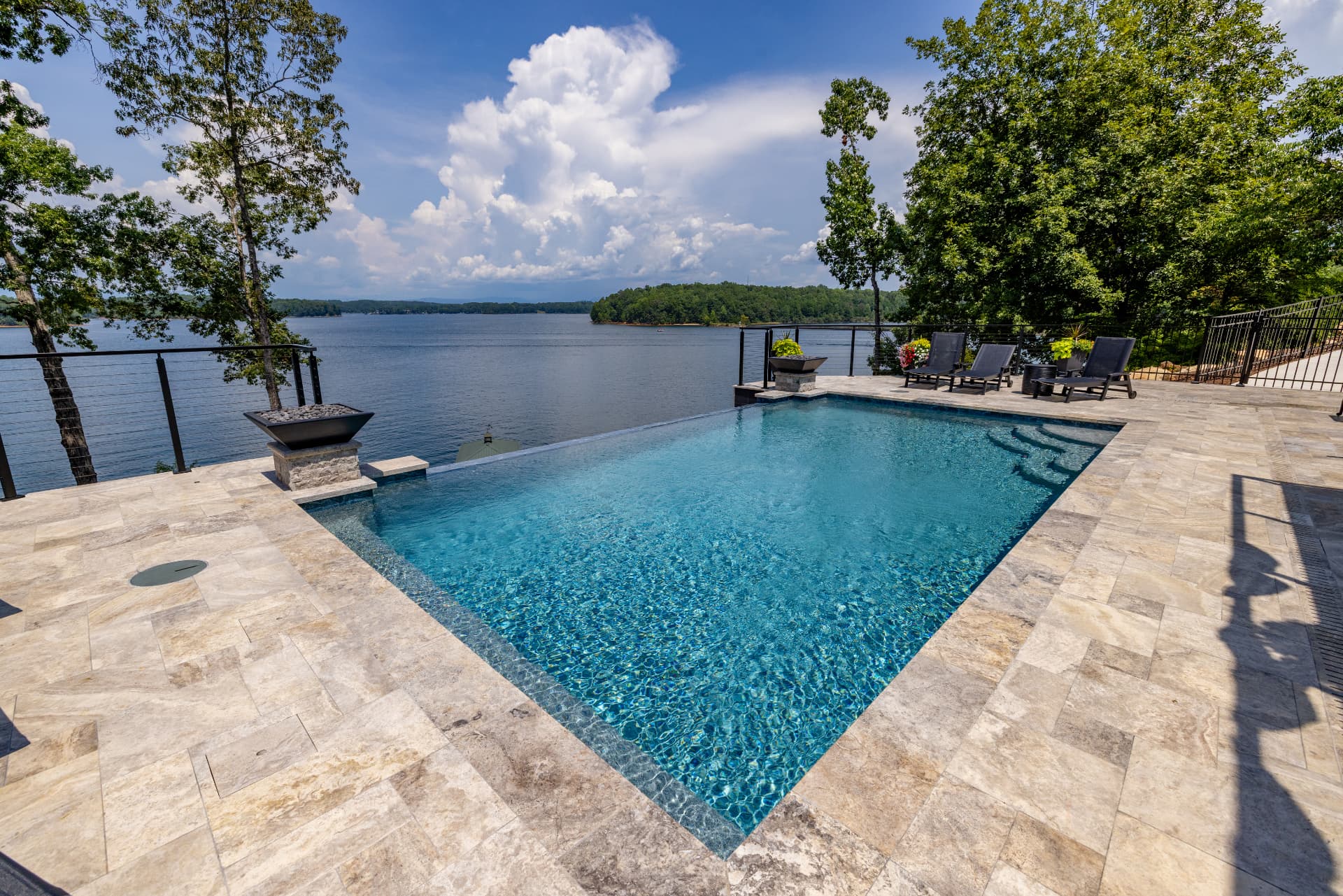
Lakefront property on Keowee is the most constrained work we do, and the constraint is the whole job. The land between your house and the water is not simply yard. Duke Energy manages the shoreline under a federal license, the buffer along the waterline has rules about what can be cleared and what cannot, and the slope running down to the water is usually steep enough that anything done carelessly ends up in the lake after the first hard rain. So we start every Keowee project the same way: figure out where the project boundary actually sits, what the covenants on your particular development say, and what the grade is doing with water right now. Then we design. The three things owners most often want are a clear view corridor to the water, a safe and attractive way to get down to the dock, and a bank that stops eroding. All three are achievable. All three go wrong when somebody clears too much, cuts stairs into an unstable slope, or trucks in fill that washes out. Our Keowee work leans on stone — steps, low retaining walls, dry creek beds that carry roof and driveway runoff past the bank rather than over it — and on deep-rooted native plantings that hold soil instead of just covering it. We keep turf back from the water where it makes sense, because fertilizer and lake water are a bad combination and because a mowed slope down to the shoreline is how banks fail. Maintenance after the install matters just as much. Lakefront beds take wind, sun reflection off the water, and heavy weekend foot traffic.

Local conditions

What Lake Keowee properties actually need

Keowee is a Duke Energy reservoir with a normal full pond around 800 feet, and the level moves through the year — that fluctuation is what undercuts unprotected banks. Wave action from boat traffic does the rest, and the busiest coves see it every summer weekend. Soils on the slopes above the water are thin over saprolite and weathered granite. They hold plants once roots are established but slough badly while bare, so we stage plantings with erosion matting rather than leaving graded ground open through a rain cycle. Exposure is severe compared with an inland lot: full sun plus reflected light off the water, drying wind, and much colder winter wind on north- and west-facing shorelines. Plants that are fine a mile inland scorch here. We plant tougher material and site broadleaf evergreens out of the wind. Anything within the shoreline management buffer needs Duke Energy review before work starts. We will tell you when a plan crosses that line, and we do not guess at it.

Neighborhoods we serve

  • · Keowee Key
  • · Cliffs at Keowee communities
  • · North shore / Six Mile side
  • · Crooked Creek
  • · Fall Creek coves

Landmarks & areas

  • · Lake Keowee
  • · Keowee-Toxaway State Park
  • · High Falls County Park
  • · Keowee Marina
  • · Duke Energy World of Energy

Questions from Lake Keowee homeowners

Can I clear trees for a better view of the water?

Partly, and it depends where the trees are. Inside the Duke Energy shoreline buffer, clearing is regulated and some work requires review before it starts. Above the buffer you have far more freedom. We usually get the view you want through selective limbing up and thinning rather than removal, which is both permissible and better for the bank.

My bank is washing away. What actually fixes it?

Stopping the water before it reaches the bank and putting roots in the soil. In practice that means redirecting roof and driveway runoff into a dry creek bed or drain that discharges safely, terracing or stone-toe protection where the grade is steep, and deep-rooted native plantings set through erosion matting. Riprap alone at the waterline without fixing the runoff above it just moves the problem.

Request an estimate for your Lake Keowee property

Let's Talk

Ready for a crew you don't have to chase?